
The Super Falcons
SPORT
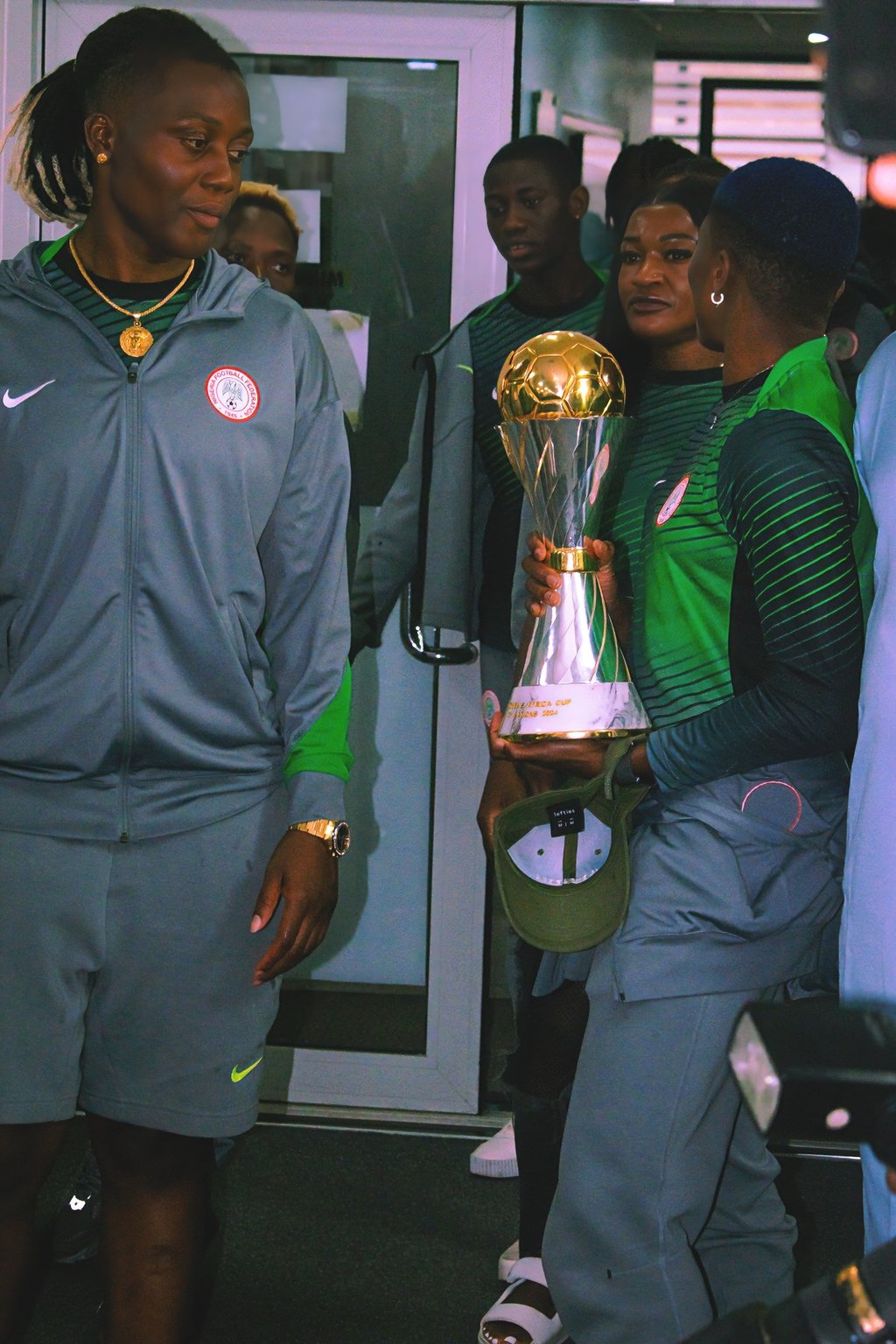
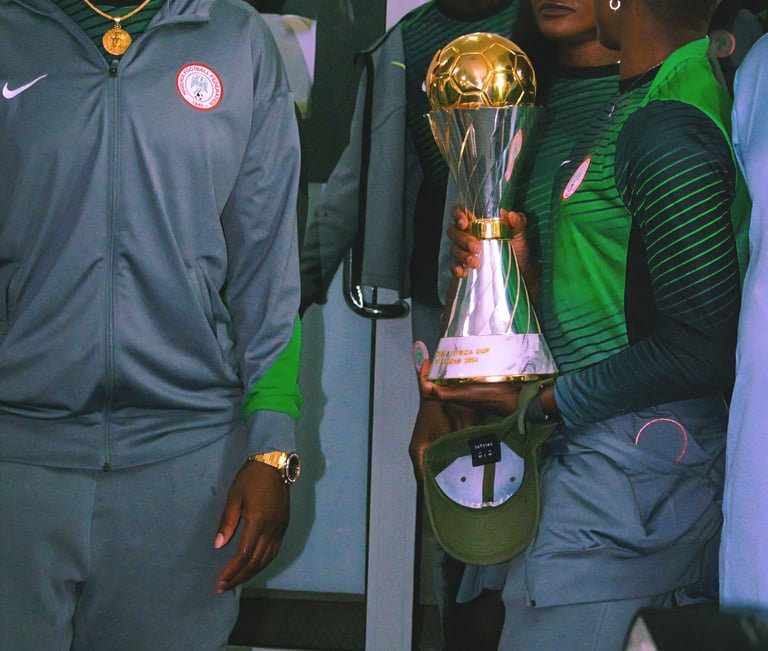
From rusted railings in the inner city to roaring stadiums on the continent’s biggest stage, this is a story of dreams carried by grit, faith, and an unbreakable will to win.
In her eyes glimmered hope, and her mind brimmed with dreams; she clutched the ball, scuffed and its seams fraying at the seams, old yet a testament of a story of strife in secret and in the open in her earnest pursuit for mastery.
Her gaze fixed on the F.C. Robo banner that clung tightly to the rusted railings of a bungalow in the sprawling inner-city of Ilasamaja. Her mind, unfettered as it was, had traveled to the grandiose, sweeping forms of Europe ’ s stadiums, oblivious to the environment she stood in. It was a dream so big it felt almost palpable, one so vivid that it evoked a smile, the kind seen only on the face of one who has already vanquished. This is the genesis of a story that will be told for generations, a name that echoed through the stadium in Rabat, thrumming with passion on that special night.
The crowd, draped in the colors of their nations, chanted at the top of their voices with fervor that made it seem as though it would be their last, as if there would be no other game that would matter in the history books than this one. The atmosphere was unlike anything you have ever seen, as the thunderous noise seemed to ripple through the stadium ’ s very foundations. Children waved their little flags, some painted their faces, and you could literally feel the pulsating patriotism everywhere. And so it began; at the sound of the whistle, the cheers increased and the euphoria heightened, each side hoping to take the day. The tussle went on and on, with sweat, grit and wit.
One side hoped to cement a legacy by winning it for the record 10th time and the other sought to make it their first. Like a silent prayer answered in the hearts of Moroccan football faithful, Ghizlane Chebbak fired a thunderous strike that set the pace for a dominating first half for Al-Maghrib. Two more goals went in for the Atlas Lionesses in that half. Fans wearing the Nigerian emerald-green jerseys could be seen grasping their heads in utter disbelief and hope ebbed from the hearts of many. The cadence in the chants told what went on in the minds of the fans of the Nation of Green-white-green.
The whistle for the second half was blown. It was a chance for the Nigerian side to redeem themselves or for the Atlas Lionesses to turn it into an emphatic victory. The entire nation stood still; comments poured in, and breaths were held, as everyone knew a miracle would be needed in the second half. Then, what seemed like a flash of hope was cut short. Folamide Ijamilusi’s powerful cross was stopped, but it was a handball. A penalty was awarded to Nigeria. Esther Okoronkwo stood up to the challenge, with the fate of an entire nation in the finals, resting on her shoulders.
For some, it felt like Gonzalo Montiel ’ s moment, that night on December 18th, 2022 at the Lusail Stadium, 3 years before. Tensions were high, as that was considered to be the defining moment that could turn the game around in Nigeria ’ s favour.
And then, it went in.
For the next 22 minutes, every pass, every tackle, and every shove, needed to matter, a footballing legacy of the most populous black nation on Earth, depended on it. Millions of hearts, from Lagos to Abuja and all the way to Rivers State, thumped in unison. And just like that, exactly three minutes after Queen Esther’s feat, Folamide squared herself and struck, it was the equalizer. Nigeria had been offered a chance at redemption, every touch felt heavier and time seemed to pass by slower than normal, shorter breaths were taken and every eye darted instinctively to the match timer.
In the twinkle of an eye, there was a rush toward the goalpost; about five Nigerian players were headed for one thing, the ball. It was the 88th minute, with only a few minutes remaining before the game would be sent into extra time and then, if the scores remained level, the much-dreaded penalties would be taken.
What was it going to be?
With a low shot, as clean as a sheet of glass, Jennifer Echegini slotted the ball past the Moroccan goalie. The entire stadium erupted; the reserve players sprinted towards the goal scorer; the green white green flags billowed; the wait was finally over. Nigeria had clinched the much-desired trophy, cementing its place in the history books as the only country to have won W AFCON a record 10 times, a feat that made the nation tower above others on the continent and the force to reckon with regards to women’s football.
This is the story of the young girl who went on to be Champion of the continent, all the way from the inner city to the big stage. T raining on a growling stomach, she remained unfazed and enduring, with only one image in her mind: the prize of great glory conferred on her and being able to look back and know that it was worth it.
Related Stories

© 2026 Voya Creative Ventures. All rights reserved
VOYA IS FOR EVERYONE BECAUSE EVERYONE HAS A STORY.
Voya Creative
Building a new operating system for Africa and it diaspora.